
How to Choose the Right Data Storage Solution for Your Business Needs

Selecting an inappropriate data storage solution can be a critical mistake for any business. It’s vital to consider the volume of data, desired scalability, data retention period, and the expected latency. Aligning the nature and use of data with these parameters is essential for effective data management.
Imagine the inventory system of a retail store. Stock levels don’t fluctuate by the millisecond; therefore, it wouldn’t make sense to update them at that frequency. Replenishments are governed by human-operated processes, so the update interval should logically exceed the time it takes for these physical actions to occur.
Data storage options can be categorized based on the above criteria, as outlined in the accompanying table:
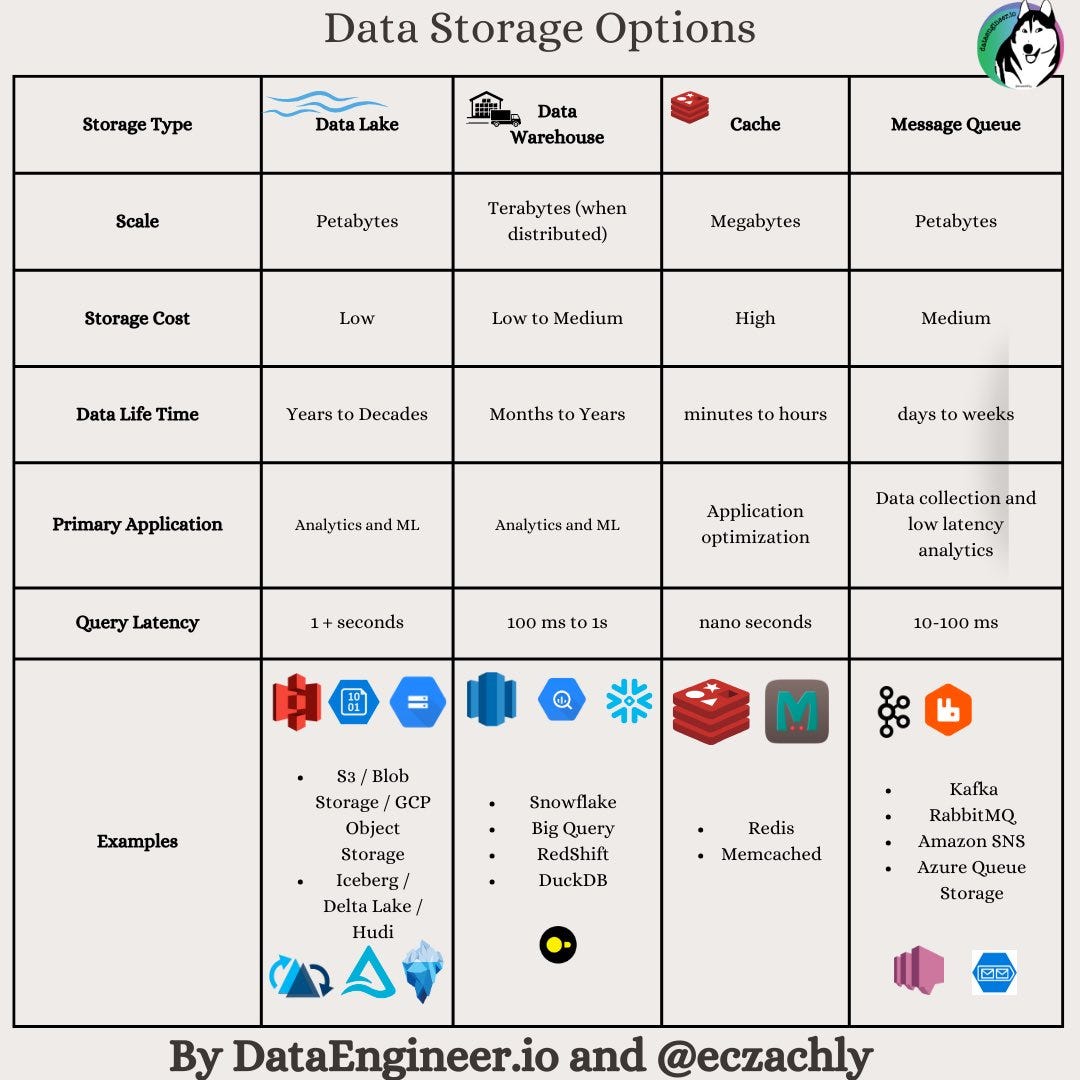
This categorization helps businesses match their storage solutions with their final application. For instance, a data lake is suited for large-scale analytics and machine learning, where petabytes of data can be stored for years. On the other hand, a data warehouse might serve better for structured data requiring complex queries with a moderate latency.
Cache systems are the go-to for instant access, ideal for application optimization where data is transient and storage costs are less of a concern. Meanwhile, message queues provide a middle ground with moderate storage costs and latency suitable for tasks like data collection and real-time analytics.
In conclusion, choosing the right data storage mode is crucial and should be tailored to the end application. A clear understanding of your data’s characteristics and how it will be used is the key to selecting the most efficient and cost-effective storage solution. Remember, the goal is not just to store data but to retrieve and use it optimally.